
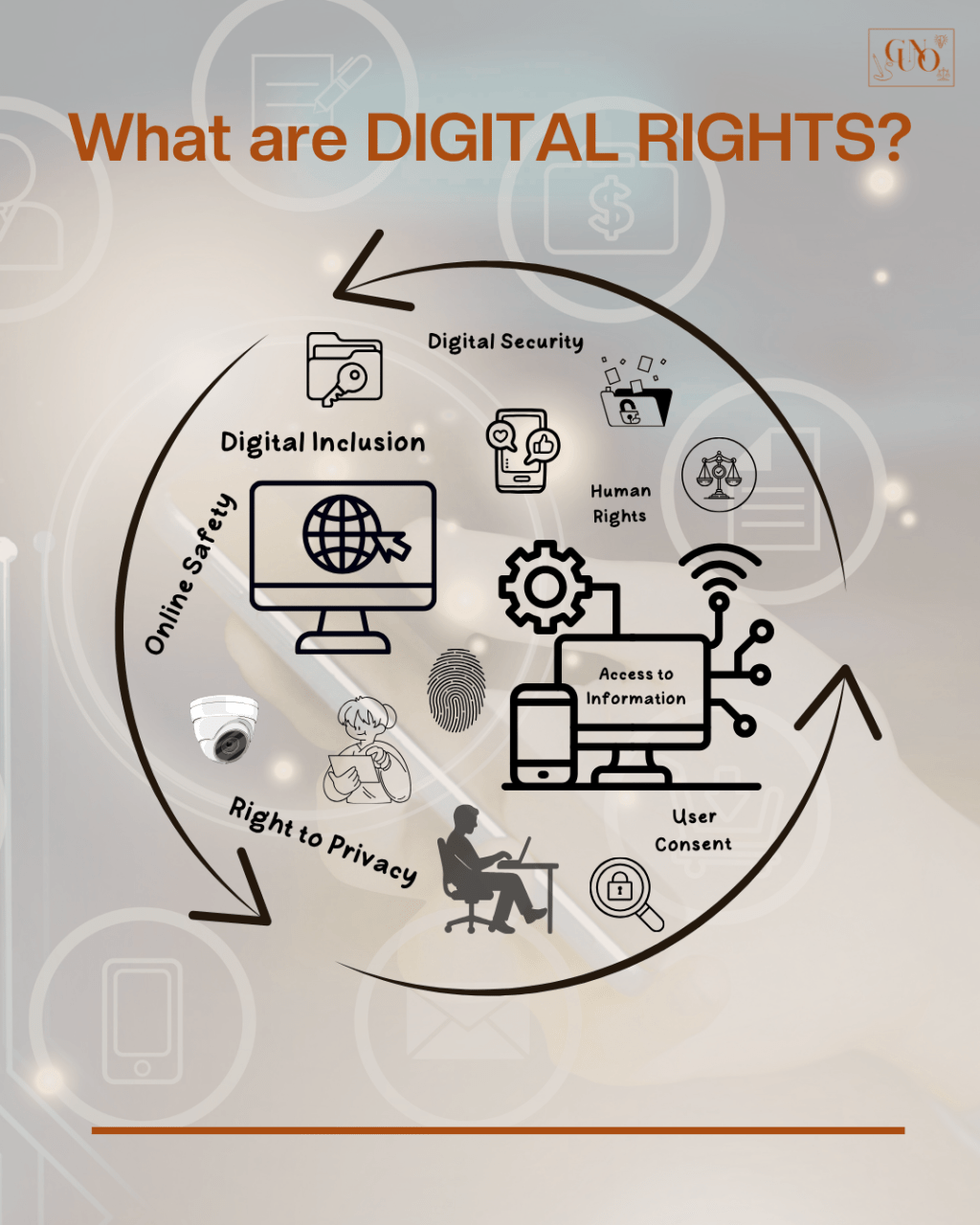
As technology becomes more integrated into daily life, a critical question arises – How can human rights be effectively protected within digital environments?
Addressing this question requires an understanding of how human rights are applied in digital contexts. Digital rights refer to the application of existing fundamental human rights within digital spaces. For example, freedom of expression applies to what we post or share online, just as it does in public forums offline. Privacy rights, too, are relevant when we send messages through applications, interact with others online, or store personal information in cloud services. These rights are not newly established, rather, they represent the extension of human rights to online and technology-facilitated activities.
Like many human rights, digital rights are not absolute. For example, freedom of expression online does not extend to incitement to violence, harassment, or other forms of unlawful conduct that may infringe upon the rights and freedoms of others. Accordingly, digital rights may be subject to lawful, necessary, and proportionate limitations to protect the rights of others, public safety, or other legitimate public interests.
As society becomes more digital, decisions by governments, employers, educational institutions, healthcare providers, financial organizations, and technology companies increasingly shape individual opportunities, experiences, rights, and freedoms. These decisions often rely on data, algorithms, artificial intelligence, and information technology systems.
Several issues have become increasingly prominent in contemporary digital society, including but not limited to AI bias, Workplace surveillance, Data privacy, online abuse, Misinformation, Algorithmic discrimination, Internet access and digital inclusion.
These challenges extend beyond technological concerns and increasingly encompass human rights, legal, governance, compliance, and public policy considerations. They intersect with issues of accountability, equality, transparency, fairness, human dignity, non-discrimination, and access to justice.
The protection of digital rights necessitates safeguarding privacy, promoting digital inclusion, ensuring informed consent, supporting online safety, preserving access to information, and fostering the responsible development and use of technology.
As our social, economic, and civic activities become increasingly digital, understanding digital rights is essential for meaningful participation in contemporary society, informed engagement in digital environments, and the prevention of human rights abuses and violations in evolving digital contexts.
#DigitalRights #HumanRights #DataProtection #Privacy #AIEthics #DigitalGovernance #DigitalInclusion #TechnologyLaw #HumanRightsLaw #DigitalCitizenship


Leave a Reply